
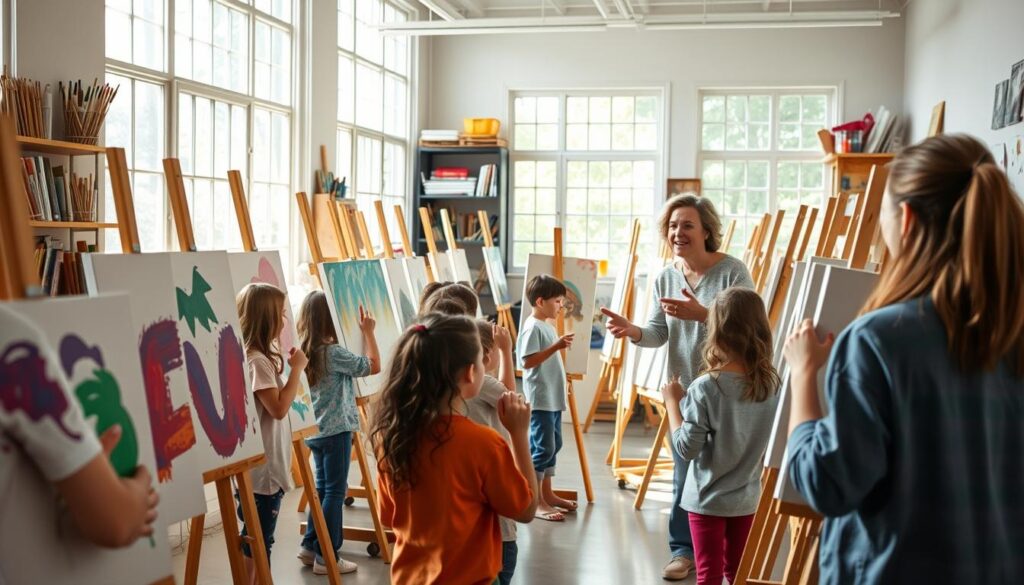
Exploring the world of fine arts can change you. It lets you express yourself in unique ways. Art classes teach you different techniques and mediums.
When you dive into fine arts, you find new inspiration. You can make your artistic dreams come true. This journey helps you grow and appreciate creativity more.

Key Takeaways
- Discover the transformative power of fine arts
- Explore various techniques and mediums through art classes
- Unleash your creative potential and turn artistic dreams into reality
- Foster personal growth and cultivate a deeper appreciation for the creative process
- Find new sources of inspiration in the world of fine arts
The Transformative Power of Fine Arts
Getting involved in fine arts can change your life. It helps you grow as a person. The fine arts, including visual arts and performing arts, shape our culture and who we are.

Definition and Cultural Significance
Fine arts are more than just pretty things. They show our society, history, and values. They cover painting, sculpture, dance, music, and theater, adding to our cultural heritage.
They help us share deep feelings, ideas, and experiences. This way, they reach beyond words and cultures.
How Fine Arts Shapes Personal Development
Being part of fine arts changes you in big ways. It boosts your thinking skills and lets you express feelings.
Cognitive Benefits
Doing fine arts makes your brain work better. It sharpens memory, attention, and problem-solving. For example, playing music improves spatial skills, while visual arts boost hand-eye coordination.
Emotional Expression
Fine arts are a strong way to share feelings. Through art, you can show complex emotions and experiences. It’s a great way to deal with stress and other feelings.
This is especially helpful for those who find it hard to talk about their feelings. It gives them a way to share their inner world.
Exploring Different Types of Fine Arts
Exploring fine arts reveals a world of creativity. It includes many art forms, each with its own style and importance.
Visual Arts: Painting, Sculpture, and Photography
The visual arts are key in fine arts. They include painting, sculpture, and photography. Artists use different materials and techniques to express themselves.
Painting can be watercolor or oil on canvas. Sculpture shapes materials like clay, metal, or stone into three-dimensional art.

Performing Arts: Dance, Music, and Theater
The performing arts are also crucial in fine arts. They include dance, music, and theater. These arts need performance and interaction with the audience.
Dance is about movement and expression. Music covers many genres and instruments. Theater combines acting, dialogue, and stagecraft to tell stories or show emotions.
Literary and Digital Arts
Literary and digital arts mix traditional writing with modern tech. This category includes various forms that blend tradition with digital innovation.
Traditional Forms
Traditional literary arts include poetry, novels, and short stories. These have been key in literature for centuries. They let writers explore complex themes and emotions.
Emerging Digital Mediums
New digital mediums have changed how we see and interact with art. Digital arts include digital painting, graphic design, and interactive installations. These use technology to create new ways to express creativity.
The variety in fine arts shows human creativity’s endless possibilities. Whether through old mediums or new digital ones, fine arts keep evolving and engaging people everywhere.
Getting Started: Essential Materials for Beginners
Starting your fine arts journey needs the right tools and space. For beginners, it can feel overwhelming. But, with the right help, you can do great.
Basic Supply Checklist for Different Art Forms
Each art form needs its own supplies. Painting needs brushes, canvases, and paints. Sculpting requires clay, wire, and tools. Here’s a list for common art forms:
- Painting: Acrylic or oil paints, brushes, palette, canvas or paper
- Drawing: Pencils, erasers, sketchbook, charcoal
- Sculpting: Clay, wire, sculpting tools, armature
Budget-Friendly Options for Novice Artists
Starting your fine arts journey doesn’t have to cost a lot. Many art supply companies offer discounts for students or beginners. Look for sales or use coupons to save. “You don’t need to invest in the most expensive materials to create something beautiful.”

Setting Up Your First Art Studio Space
Having a dedicated art space can really help your creativity. When setting up your studio, think about these things:
Space Requirements
Make sure you have enough room to work comfortably. The space should be well-ventilated and free from distractions. As artist
Georgia O’Keeffe
once said,
“Whether you succeed or not is irrelevant, there is no such thing.”
Having a dedicated space encourages you to keep creating.
Lighting Considerations
Good lighting is key for fine arts. Natural light is best, but if not possible, get high-quality lamps. Proper lighting helps you see colors and details better.
By focusing on these essentials, beginners can build a strong foundation. This makes the journey more fun and rewarding.
Mastering Fundamental Fine Arts Techniques
At the heart of fine arts are basic techniques every artist needs to master. These techniques are key to expressing creativity fully. They help artists bring their visions to life.
Drawing Basics: Step-by-Step Approach
Drawing is a basic skill in fine arts. It lets artists observe, interpret, and render the world. To master drawing, start with the basics.
Line and Contour Exercises
Line and contour exercises are vital for improving hand-eye coordination. They help artists understand form and shape. Practicing these exercises enhances the ability to capture subjects’ essence.
- Start with simple line exercises to loosen up your drawing muscles.
- Progress to contour drawing, focusing on the edges and outlines of objects.
- Practice drawing from life or using reference images to challenge your skills.
Shading and Texture Techniques
Shading and texture add depth and dimension to drawings. They transform flat outlines into lifelike representations. Knowing how to manipulate light and shadow is key for realistic art.
“The art of drawing is not just about marking lines on paper; it’s about capturing the essence and spirit of the subject.” –
Unknown
| Technique | Description | Effect |
| Hatching | Creating shading using closely spaced parallel lines. | Gradations of tone and texture. |
| Cross-Hatching | Layering hatching lines at different angles. | Deeper, richer tones and detailed textures. |
| Stippling | Creating images using small dots. | Highly detailed, nuanced shading. |
Color Theory in Practice
Color theory is crucial in fine arts, affecting mood, emotion, and perception. Understanding color theory helps artists choose their palette wisely.

Colors are categorized into primary, secondary, and tertiary colors. Each has a unique role in the color wheel. Knowing how to mix colors and create harmonious schemes is key for artistic expression.
Composition Rules and When to Break Them
Composition is arranging elements in a work of art. It guides the viewer’s eye and creates a cohesive visual experience. While there are rules for effective composition, knowing when to break them is also important.
Key composition rules include:
- The Rule of Thirds: Dividing the canvas into thirds both horizontally and vertically.
- Symmetry: Creating a mirror-like effect on either side of a central axis.
- Leading Lines: Using lines to guide the viewer’s eye through the composition.
By mastering these fundamental techniques, artists can build a strong foundation. This enables them to explore and express their artistic vision with confidence.
How to Develop Your Unique Artistic Voice
Finding your artistic voice takes time, effort, and a desire to explore. As you delve into contemporary art, creating a unique style is key to standing out.

Finding Inspiration Sources
Inspiration is everywhere, from nature to other artists’ work. To spark your creativity, try new things like different cultures, books, or travel. Stay open to new experiences and let the world inspire you.
- Visit museums and galleries to study the works of renowned artists.
- Engage with different art forms, such as music, dance, or theater, to broaden your creative horizons.
- Keep a journal or sketchbook to record your thoughts and ideas.
Practical Exercises for Style Development
Developing your style means trying new things and practicing. Experiment with different techniques and mediums to find what works for you. This process sharpens your skills and lets you share your unique view.
- Experiment with various art materials, such as paints, inks, or pastels.
- Create a series of pieces that explore a specific theme or subject.
- Collaborate with other artists to gain new insights and inspiration.
Balancing Influence and Originality
It’s vital to study other artists but also keep your work original. Understand the influences that shape you and then add your own twist. This way, you stay true to yourself while drawing from others.
Study of Masters
Learning from the masters is more than copying their style. It’s about grasping their creative choices and context. This understanding can enrich your own artistic journey.
| Artist | Style/Period | Influence |
| Picasso | Cubism | Fragmented forms, multiple perspectives |
| Van Gogh | Post-Impressionism | Expressive brushwork, vivid color |
| Warhol | Pop Art | Use of everyday images, silkscreen printing |
Personal Experimentation
Experimenting personally is key to finding your artistic voice. Try new techniques, mediums, and push your creativity. This way, you can find new ways to express yourself.
Embracing your unique artistic voice is a journey that requires dedication, curiosity, and a willingness to evolve.
Learning Pathways in Fine Arts Education
Exploring fine arts education means looking at various paths. Each path has its own benefits. Whether you’re new or experienced, your choice affects your growth as an artist.
Comparing Formal Education Options
Formal education, like art school or university degrees, offers a structured learning environment. These programs teach art techniques and history well. But, they can be expensive and not for everyone.
Self-Directed Learning Strategies
Self-learning lets you set your own pace and focus. You can use online tutorials, books, and practice. This method needs discipline but can be fulfilling. Many artists learn this way, using their creativity and resourcefulness.
Online Courses and Virtual Workshops
Online learning is growing, offering both flexibility and structure. It ranges from free to paid options.
Free Resources
- YouTube tutorials on various art techniques
- Free online courses from platforms like Coursera and edX
- Art communities and forums
Premium Learning Platforms
- Skillshare for in-depth art classes
- Udemy courses on specialized art topics
- Professional art instruction on platforms like New Masters Academy

In conclusion, the right learning path in fine arts depends on your goals and situation. Knowing your options helps you choose the best way to grow your artistic skills.
Step-by-Step Guide to Creating Your First Art Project
Starting your first art project is a big step. It’s the start of a new journey where you bring your ideas to life. This guide will help you from the beginning to the end, giving you a strong base to grow from.
Conceptualization and Planning
The first step is to think of your idea. This means brainstorming, picking a theme, and choosing how to make it. Research and inspiration are important here. Look at other artists, read books, and explore cultures to spark your creativity.
After you have a clear idea, make a plan. Sketch out ideas and list what you need.
Execution Process with Troubleshooting Tips
Now it’s time to start making your project. Set up your space and get your materials ready. You might face problems like bad color mixes or layout issues. Troubleshooting these problems is key. Be open to trying new things and changing your plan if needed.

Finishing Touches and Presentation
After you finish, focus on the final details. This includes adding varnish, framing, or anything else that makes your art stand out.
Framing Options
Choosing the right frame is important. Think about the frame’s style, color, and material and how they match your art.
Digital Documentation
In today’s world, showing your art online is crucial. Take clear photos of your art from different sides and in different lights. This helps you build a digital portfolio and share your art with more people.
By following these steps, you’ll not only finish your first art project but also learn a lot about creating and showing your art.
Overcoming Creative Blocks: Practical Solutions
Breaking through creative blocks needs self-awareness, technique, and motivation. Artists often hit a wall where their creativity seems blocked. But, knowing the reasons and using the right strategies can help get past these hurdles.
Identifying Your Specific Obstacles
The first step is to figure out what’s blocking your creativity. It could be a lack of inspiration, fear of failure, or outside pressures. Self-reflection is crucial to spot what’s holding you back. Once you know, you can plan how to overcome it.
Five Techniques to Reignite Creativity
Here are five ways to spark your creativity again:
- Change Your Environment: A new place can spark new ideas.
- Experiment with New Mediums: Trying new art forms can bring fresh ideas.
- Set Constraints: Working with limits can actually boost creativity.
- Collaborate with Others: Working with other artists can offer new views.
- Practice Regularly: Keeping up with creating helps keep the spark alive.

Building a Sustainable Creative Practice
Creating a lasting creative practice means daily habits and long-term drive.
Daily Habits
Having a daily routine for creating keeps the momentum going. This could be sketching, journaling, or other creative tasks that keep your skills sharp.
Long-term Motivation
For lasting motivation, set goals you can reach and celebrate your wins. Continuous learning and finding inspiration from many places also help keep creativity alive.
By using these methods, artists can not only get past creative blocks but also build a strong and lively creative practice.
How to Showcase and Share Your Fine Arts Work
Showcasing your fine arts work is key to getting noticed in the art world. You put a lot of time, skill, and emotion into your art. Showing it well can really boost your career.
Building a Professional Portfolio
A professional portfolio is a must for artists. It should have your best work, showing off your range and skill. Organize your portfolio well, whether it’s physical or digital.
Digital Platforms and Social Media Strategies
In today’s world, having an online presence is vital. Use social media platforms like Instagram and Facebook to reach more people. Post high-quality images of your work often and talk to your followers to grow your fan base.
Entering Exhibitions and Competitions
Entering art shows and competitions is a smart move. Look for local and global chances that fit your style. Make sure you follow the application process closely and meet the standards.
Application Process
Read the application rules carefully for each event. Make sure you send all needed stuff, like artist statements, CVs, and clear images of your work.
Presentation Standards
Keeping high presentation standards is crucial. This means framing your art well, writing clear artist statements, and keeping your online profiles current.
By using these tips, you can show and share your fine arts work better. This will help you get more noticed in the art world and open up new chances.
Building Your Art Community Network
Being part of a vibrant art community can open many doors for artists. Building connections within this community can boost your artistic journey. It also leads to new collaborations and growth.
Finding and Joining Local Art Groups
Local art groups are great for sharing your work and getting feedback. Look for them at local art supply stores, community centers, or online at Meetup.com. Joining these groups can help you grow and improve your craft.
Effective Networking at Art Events
Art events like exhibitions and workshops are perfect for networking. Be ready to talk about your work and show interest in others’. Effective networking means building real relationships, not just collecting contacts.
Collaborative Projects and Mentorship
Working on projects with other artists can spark new ideas. Mentorship is also key in the art world. It offers guidance and support, helping artists in their careers.
Finding a Mentor
To find a mentor, look for artists whose work you admire. Reach out via email or social media. Show your admiration and desire to learn. Many artists are happy to mentor if they see your enthusiasm.
Becoming a Mentor
If you have art experience, think about mentoring. Share your knowledge and skills with new artists.
“The best way to get ahead is to help others get ahead.” – Anonymous
Mentoring not only helps others but also sharpens your skills by teaching.
The Business of Fine Arts: From Passion to Profession
Artists wanting to make money from their work need to learn about the business side. It’s not just about being good at art. You also need to know how to sell it.
Pricing Strategies for Artwork
Figuring out how much to charge for your art can be tough. You have to think about your time, materials, and skills. Plus, you need to know what buyers are willing to pay.
- Cost Calculation: Add up the cost of materials, time, and other expenses.
- Market Research: Look at what other artists are charging for similar work.
- Target Audience: Know how much your audience is willing to spend.
Marketing Your Art in the Digital Age
Today, you need a strong online presence to market your art. Use social media, online galleries, and digital marketing to get your work seen by more people.
“The art world is evolving, and artists must adapt to new technologies and platforms to succeed.” –
Art Market Expert
Legal Protections for Artists
Artists need to know about legal protections to keep their work safe.
Copyright Basics
Copyright law protects your original work. It gives you special rights over it. Registering your work with the U.S. Copyright Office can give you more legal benefits.
Contracts and Agreements
When working with galleries, clients, or others, you need contracts. Make sure they are clear. They should cover things like payment, rights, and who does what.
By learning about pricing, marketing, and legal rights, artists can make a living from their passion.
Contemporary Trends Shaping the Future of Fine Arts
The art world is changing fast, thanks to tech, social views, and green efforts. These changes show that art’s future is bright and full of new ideas. It’s both thrilling and a bit scary.
Digital and New Media Innovations
Digital art is big now, thanks to tech. Artists are making art in new ways like virtual reality and AI. This is changing how we see and interact with art.
Social Commentary in Modern Art
Modern art talks about big issues like fairness, climate, and justice. Artists are pushing boundaries and making us think. They’re key in today’s conversations.
Sustainable and Eco-Conscious Art Practices
The art world is going green. Artists and places are using eco-friendly ways. It’s about caring for our planet and making art that matters.
Materials Innovation
Artists are finding new, green materials. They use recycled and natural stuff. This makes art more meaningful and helps the planet.
Environmental Themes
Many artists focus on the environment. They show the beauty of nature and the harm we cause. Their work is vital in making us care and act.
Conclusion: Embracing Your Artistic Journey
Starting an artistic journey in fine arts can change you deeply. It helps you grow and express yourself creatively. This article showed how wide-ranging fine arts are, covering many areas like visual and performing arts.
Learning the basics of fine arts and finding your own style can unleash your creativity. Whether you’re new or have experience, fine arts provide endless chances to express yourself and innovate.
Remember, fine arts are more than just making art. They help you understand yourself and the world better. By following your creative passion, you can bring new ideas to life and positively impact your community.
The path of fine arts is lifelong, full of discovery and growth. By staying true to your art, you’ll find joy and fulfillment in creating something unique.
FAQ
What are the different types of fine arts?
Fine arts include many forms. Visual arts like painting and sculpture are part of it. So are performing arts like dance and music. Literary and digital arts also fall under this category, covering both traditional and new digital mediums.
How do I get started with fine arts as a beginner?
Start by getting the basic supplies for your chosen art form. Look for affordable options. Then, set up a space for your art, considering the size and lighting you need.
What are some fundamental fine arts techniques I should learn?
Learning to draw is key. Start with simple exercises like lines and shading. Understanding color and composition is also crucial for creating art.
How can I develop my unique artistic voice?
To find your unique voice, seek inspiration and practice your style. Balance learning from others with your own experiments. This way, you can create something truly original.
What are the available pathways for fine arts education?
You can get an education through formal programs or self-learning. Online courses offer both free and paid options. This flexibility helps you learn at your own pace.
How do I overcome creative blocks?
To break through creative blocks, first identify what’s holding you back. Then, use techniques to spark your creativity. Building a daily routine helps keep your creative spark alive.
How can I showcase and share my fine arts work?
Show your work by creating a professional portfolio. Use digital platforms and social media to share. Entering exhibitions and competitions is also a great way to get your art seen.
What are the contemporary trends shaping the future of fine arts?
Today, digital innovations and social commentary are big trends. Eco-conscious art is also growing, focusing on sustainable materials and themes.
How can I turn my passion for fine arts into a profession?
To make a living from your art, learn about pricing and marketing. Understand legal aspects like copyright and contracts. This knowledge helps you navigate the art world professionally.
How do I build my art community network?
To grow your network, join local art groups and attend events. Collaborate on projects and seek mentorship. Being a mentor yourself also helps build your network.